Cincinnati Zoo cuts down on carbon emissions, saves money through container farming
The videos above are from FOX19 NOW’s previous coverage.
CINCINNATI (WXIX) - Within the last year, the Cincinnati Zoo and Botanical Gardens has strengthened its green thumb with its new Farm to Stable program, an innovative way to not only save money by growing food but also to become more sustainable in the long run.
Known as the “Greenest Zoo in America,” the Cincinnati Zoo has worked to become a Net Zero zoo with its recent water conservation project or the solar power farm in Warren County. Now, the sustainability team is taking it a step further with the Farm to Stable program.
This program doesn’t consist of your average farm. All of the magic actually happens a few blocks over from the zoo in a gravel parking lot off Vine Street in Avondale inside two shipping containers.
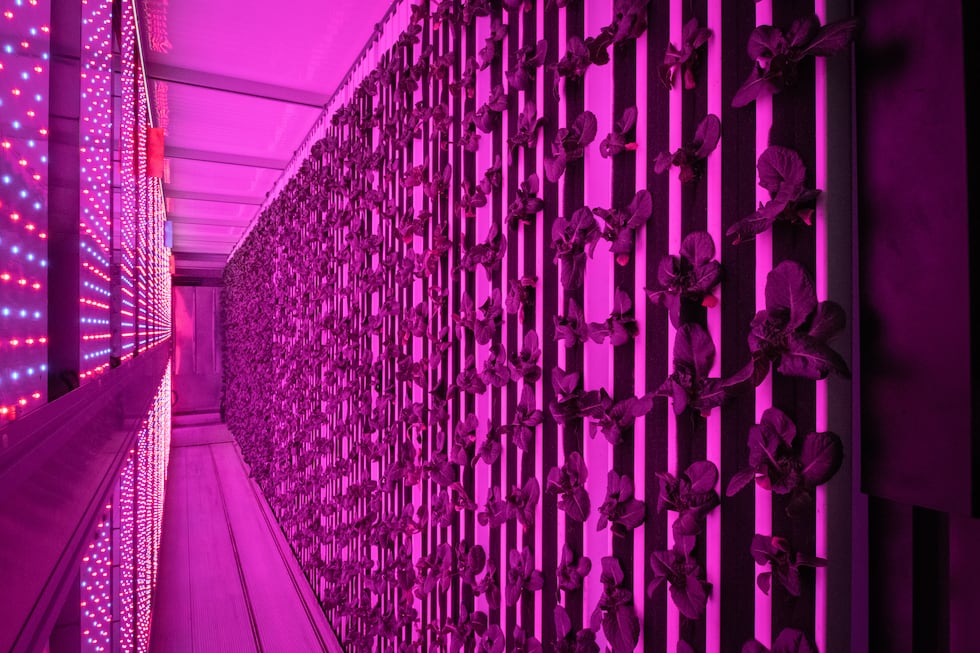
Two hydroponic farms are located next door to the former City Barn. Open the doors, and you’ll find hundreds of growing lettuce and kale heads waiting to be fed to the herbivore residents, such as the giraffes, elephants, manatees, hippos, rhinos, and okapi.


Hydroponics is the method used to grow these plants. Instead of using soil and sunlight, the vegetables can grow using a nutrient-rich liquid solution and blue and red grow lights.
Cincinnati Zoo Hydroponics Technician Zack Burns works hands-on with this technology every day. He says the Farm to Stable container farming project is the brainchild of Cincinnati Zoo Vice President of Facilities and Sustainability Mark Fischer.
“[We] kind of saw another zoo who was doing something pretty similar to growing produce for their animals on site,” Burns told FOX19 NOW. “So, we saw them doing that and it was kind of one of his dreams (Fischer) that we would be able to do that in some capacity here.”
In 2022, the Cheyenne Mountain Zoo in Colorado Springs announced its hydroponic farming system, growing leafy greens for its residents.
Inspired by their friends out West, the Cincinnati Zoo sought the same thing to become a more resilient and sustainable zoo.
Today, there are only three known zoos in the U.S. that use a hydroponics method to farm food for their animals: Cheyenne Mountain Zoo, Cincinnati Zoo and Botanical Gardens and the Philadelphia Zoo.
Inside the hydroponics container farms
The container farms were delivered in January 2024. The sustainability team began setting up the systems and within a few months, they grew their first hydroponic crops.
“It took us a few weeks to set everything up and get going, and then we seeded once everything was set up, and we had our first harvest almost a year ago in April 2024,” Burns said.
Right now, the zoo is only growing kale and lettuce from their small farms, generating about 200 to 300 pounds of food each week, he added. The team has tried growing other vegetables, like turnips, collard greens and mustard greens, however, the process was not as efficient.
“They turned out okay - we just grow lettuce the best so we’ve kind of decided that to get the better bang for our buck, we’ve mostly been growing the lettuce and the kale,” Burns explained.
That doesn’t mean they won’t keep trying to grow other crops.

To feed a zoo
It takes a lot to feed all of the animals inside the Cincinnati Zoo. It also costs quite a bit.
According to the zoo’s annual 2023-24 report, over $22.7 million was spent on animal and plant care, which made up 39% of the zoo’s expenses. That number includes food costs, vet services, habitat maintenance and more.
Like the majority of zoos in the U.S., the Cincinnati Zoo orders their food through restaurant supply companies. These products can come from anywhere in the country and are shipped in refrigerated trucks.
It could take weeks before the food arrives at the zoo’s doorstep between the time the food is harvested to the actual shipment.
But lettuce and kale are two vegetables that the zoo’s commissary team no longer needs to order mass shipments of.
“By cutting down those food miles and growing stuff right here on site, we’re not using a truck and all of the emissions associated with it…” explained Burns.
In the past year, the zoo has saved 15 metric tons of CO2 produced in transportation emissions just from growing their own lettuce and kale, Burns told FOX19 NOW. That is roughly equivalent to charging over 1.7 million cell phones.
“This is just a small portion of the, you know, kind of like feeding the zoo program.”


One of the zoo’s biggest focuses when it comes to sustainability initiatives is improving resiliency - not relying heavily on outside sources.
Not only has the Farm to Stable program made the zoo more sustainable, it also helps keep costs down.
Within the program’s first year, the zoo has produced over 10,000 pounds of romaine and kale, which equates to roughly $35,000 if they were purchased at market value, Burns said.
Through tracking data, Burns says the zoo has seen almost 100% increases in produce prices during certain times of the year. This can be linked to low supply.
“Shortages can lead to [things like] diseases to pathogen outbreaks, like E. Coli, salmonella and things like that, that can not only reduce the supply… [but] the price…” he said.
Now that the zoo has its hydroponics farms up and running with one year officially under its belt, the goal to become Net Zero in waste, water and energy is just a few steps away.
See a spelling or grammatical error in our story? Please click here to report it.
Do you have a photo or video of a breaking news story? Send it to us here with a brief description.
Copyright 2025 WXIX. All rights reserved.