What happens ecologically when a major river freezes?
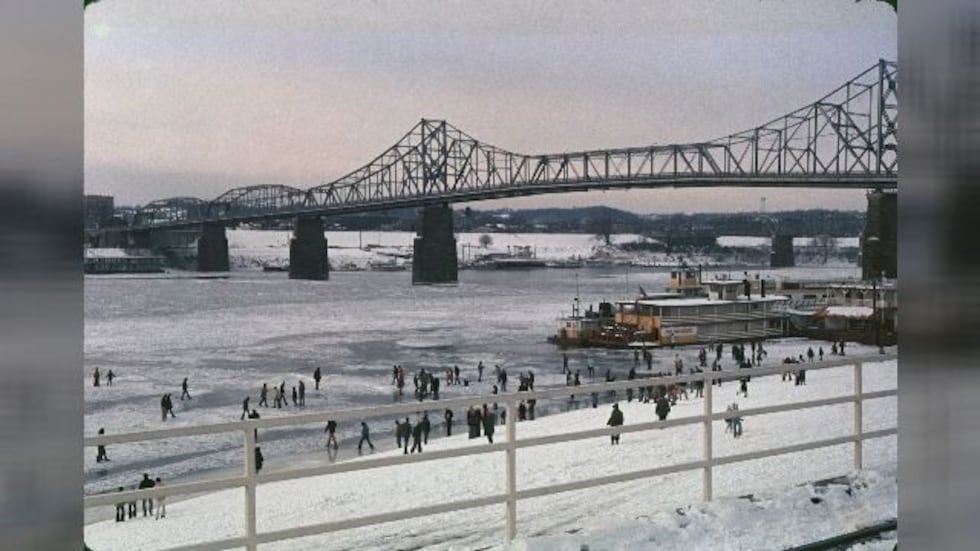
The Ohio River froze solid 49 years ago in January of 1977
CINCINNATI (WXIX) - For six days in January of 1977, the Ohio River froze solid. Ice was a foot thick in spots, with temperatures staying below zero degrees for 58 hours straight.
Richard Cogan, the executive director for The Ohio River Foundation, says when a river freezes over, life beneath the surface continues.
“Aquatic creatures will seek out the bottom where it’s warmest, or if it’s too cold for them, their metabolic rate will drop,” Cogan said. “In some cases, if you all know about freezing fish and when it thaws, then they will come out of that hibernation state. But otherwise, aquatic organisms have adapted to that kind of environment.”
Ultimately, there aren’t many changes when a river freezes.
This includes the litter and trash.
“The chemical composition of forever chemicals - PFAs or nitrogen or anything that’s in solution - is not changed by it freezing. So that is still going to be there,” Cogan said.
1977 was the last time the Ohio River froze solid in Cincinnati and Northern Kentucky.
See a spelling or grammatical error in our story? Please click here to report it.
Do you have a photo or video of a breaking news story? Send it to us here with a brief description.
Copyright 2026 WXIX. All rights reserved.