Process that cleans Hamilton County’s wastewater before it returns to the Ohio River
The Mill Creek Wastewater Treatment Plant can treat up to 100 million gallons of water per day
Download the FREE FOX19 NOW news app for iPhone
Download the FREE FOX19 NOW news app for Android
CINCINNATI (WXIX) - If you live in Hamilton County, the water that leaves your home after you flush, shower, or wash dishes doesn’t just disappear. Most of it ends up at a Metropolitan Sewer District of Greater Cincinnati (MSD) treatment plant—along with stormwater that rushes into street drains during heavy rain.
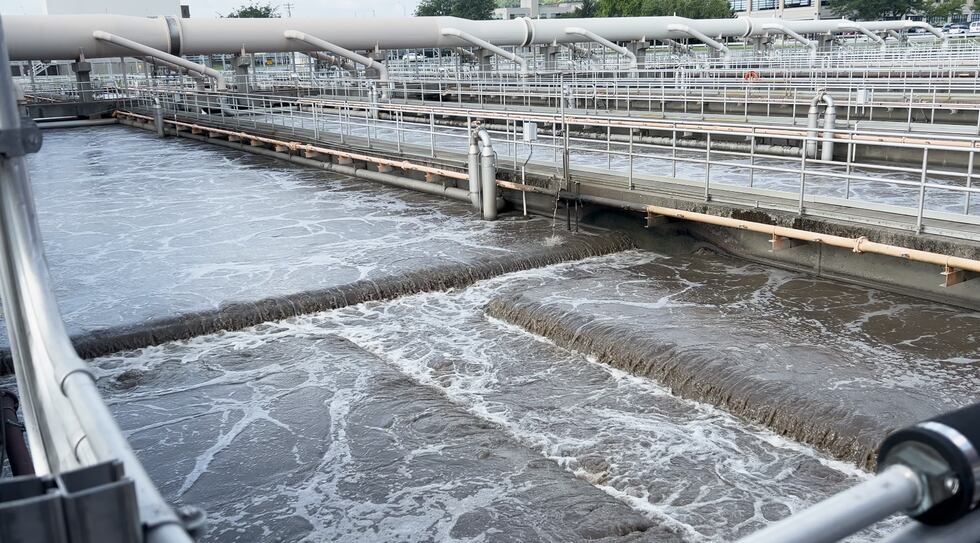
To see what happens next, we toured MSD’s largest facility, the Mill Creek Wastewater Treatment Plant, where crews can treat and return up to 100 million gallons of water per day to local waterways, including the Ohio River.
“We take your dirty water that you flush down your toilet or goes down your sink and we will treat that water and return it back to the local stream… in our case the Ohio River,” said Brad Blankenship, assistant superintendent of wastewater treatment at MSD.
Step 1: Screening out the obvious
Before treatment begins, the plant’s first job is basic cleanup. Large screens catch debris like trash, sticks, and even toys—items that shouldn’t be in the system but often end up there anyway.
Step 2: Removing grit
Next, the water moves through a process designed to pull out gritty material such as sand, gravel, and bits of asphalt—the kind of heavy stuff that can wear down equipment if it’s not removed early.
Step 3: Primary treatment (settling)
Then, the water flows into large settling tanks for primary treatment, where it sits for a few hours so heavier solids sink to the bottom.
“This is called the primary treatment… a settling process… When I say solids, this is going to be sludge… poop is really what we’re going to be calling the stuff,” Blankenship explained.
That sludge is removed—and at Mill Creek, it’s incinerated on site.
Step 4: Secondary treatment (microorganisms do the work)
After settling, the plant moves into secondary treatment, where microorganisms help break down what’s still in the water. Along the way, staff routinely test samples to ensure the process is running efficiently.
Supervising chemist Tom Fritz said one key measurement is the biochemical oxygen demand (BOD) test, which helps them monitor how much oxygen microorganisms are using and how well the treatment is performing.
Step 5: Disinfection before release
Once treatment is complete, the final step is disinfection—killing off any remaining germs before the water is released back into the river.
“At Mill Creek, we use sodium hypochlorite, which is bleach… Other facilities might use UV, but this one uses sodium hypochlorite,” Blankenship said.
How you can help
MSD says residents can help keep the system working smoothly by being careful about what goes down the drain.
“You shouldn’t flush anything besides poop, pee, and toilet paper,” Blankenship said, adding that fats, oils, and greases—like bacon grease—can cause major problems in pipes and equipment.
As Hamilton County’s wastewater makes its way through the system, Mill Creek’s goal is simple: clean it, disinfect it, and send it safely back to the Ohio River—ready to rejoin the water cycle again.
See a spelling or grammatical error in our story? Please click here to report it.
Do you have a photo or video of a breaking news story? Send it to us here with a brief description.
Copyright 2026 WXIX. All rights reserved.